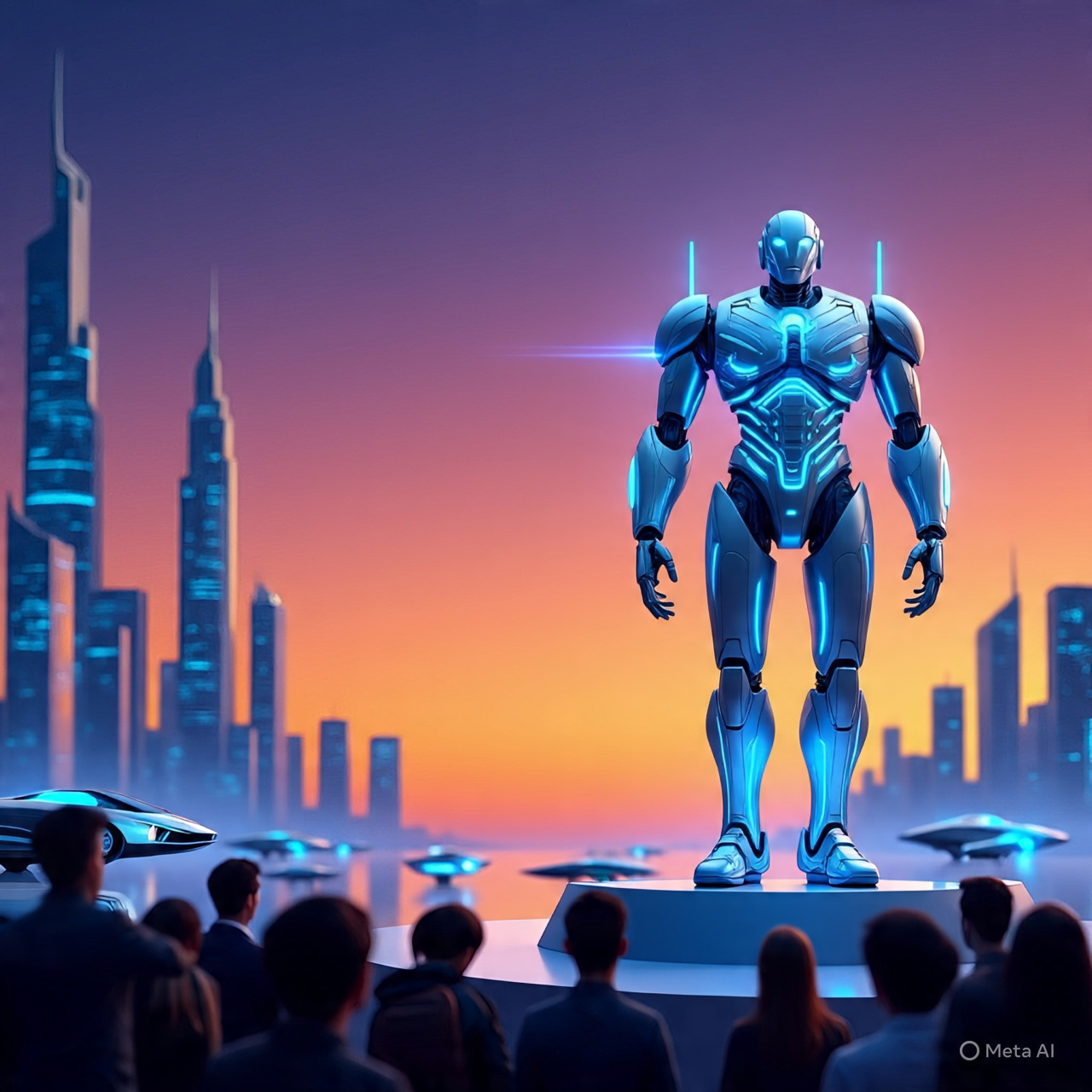
In an era where artificial intelligence is rapidly reshaping our world, a new paradigm is emerging, promising to push the boundaries of what’s possible: Horizon AI. More than just another buzzword, Horizon AI represents a visionary leap towards truly intelligent, adaptable, and ethically integrated systems. But what exactly is Horizon AI, and why is it poised to become the cornerstone of tomorrow’s technological landscape? Let’s dive deep into this transformative concept.
Background: The Evolving Landscape of Artificial Intelligence
For decades, AI has been a journey of remarkable progress, from rule-based systems to sophisticated machine learning algorithms and deep neural networks. We’ve witnessed the rise of narrow AI, excelling at specific tasks like image recognition, natural language processing, and game playing. However, the current generation of AI often grapples with limitations: a lack of true understanding, difficulties in generalizing knowledge across domains, and challenges in ensuring transparency and ethical alignment.
This is where the vision for Horizon AI takes shape. It’s not just about bigger models or faster processing; it’s about a fundamental shift towards AI that can reason, learn continuously, adapt to novel situations, and operate with a higher degree of autonomy and ethical awareness. Think of it as moving beyond mere pattern recognition to genuine comprehension and responsible decision-making.
Horizon AI vs. Traditional AI Paradigms: A Detailed Comparison
To truly appreciate the significance of Horizon AI, it’s helpful to contrast it with the AI we are more familiar with.
| Feature | Traditional AI (e.g., Narrow AI, ML) | Horizon AI (Conceptual) |
|---|---|---|
| Intelligence Type | Narrow (excels at specific tasks, struggles with generalization) | General (capable of understanding, reasoning, and adapting across diverse domains) |
| Learning Process | Primarily supervised/unsupervised, batch learning, data-intensive | Continuous, self-improving, few-shot/zero-shot learning, learns from interaction |
| Decision Making | Rule-based or statistical inference, often “black box” | Explainable, context-aware reasoning, ethical considerations integrated into decision logic |
| Adaptability | Limited; requires retraining for new tasks/environments | High; adapts to unforeseen circumstances and novel problems without extensive retraining |
| Human Interaction | Task-specific interfaces, often reactive | Intuitive, proactive, collaborative, understands nuanced human intent and emotion |
| Ethical Framework | Often an afterthought or external governance | Built-in ethical guidelines, transparency, fairness, and accountability by design |
| Resource Dependency | Can be heavily reliant on massive datasets and computational power | More efficient learning, leverages existing knowledge, potentially less data-hungry |
This comparison highlights that Horizon AI aims to address the core limitations of current systems, paving the way for more robust, reliable, and beneficial AI applications.
Key Features and Benefits of Horizon AI
The promise of Horizon AI lies in its distinctive features, which translate into profound benefits:
Advanced Reasoning and Generalization
Unlike current AIs that might master chess but fail at checkers without separate training, Horizon AI would possess the ability to generalize knowledge and apply reasoning across different contexts. This means it could solve novel problems it hasn’t been explicitly trained for, much like human intelligence.
Continuous Learning and Adaptability
Horizon AI wouldn’t just learn and then stop. It would be designed for continuous, lifelong learning, constantly updating its understanding and adapting to new data and environments in real-time. This makes it incredibly resilient and future-proof.
Ethical AI by Design
A critical aspect of Horizon AI is the integration of ethical principles from its very foundation. This includes built-in mechanisms for fairness, transparency, accountability, and privacy, ensuring that its decisions align with human values and societal good.
Multi-Modal Understanding
Imagine an AI that can not only process text but also understand images, audio, video, and even physical interactions, seamlessly integrating information from all these modalities to form a holistic understanding of the world. This is a core tenet of Horizon AI.
Enhanced Human-AI Collaboration
Horizon AI would be a true collaborator, understanding human intent, anticipating needs, and working alongside people in a more intuitive and productive manner, amplifying human capabilities rather than simply automating tasks.
Pros and Cons of Horizon AI
Like any powerful technology, Horizon AI comes with its own set of advantages and potential challenges.
Pros:
- Transformative Problem Solving: Capable of tackling complex, real-world problems that current AI struggles with, from scientific discovery to climate modeling.
- Increased Efficiency & Productivity: Automates and optimizes tasks requiring higher-level reasoning, freeing up human potential for creativity and innovation.
- Enhanced Safety & Reliability: With built-in ethical frameworks and robust adaptability, it could lead to safer autonomous systems and more reliable decision support.
- Personalized Experiences: Delivers highly tailored and intelligent assistance across various domains, from healthcare to education.
- Ethical Progress: Its “by design” approach to ethics could set new standards for responsible AI development.
Cons:
- Development Complexity: Building such an advanced, general AI is an immense scientific and engineering challenge.
- Resource Intensity: While potentially more efficient in learning, the initial development and deployment might require significant computational resources.
- Ethical Dilemmas: Even with “ethics by design,” unforeseen ethical challenges or biases could emerge, requiring continuous oversight.
- Societal Impact: Potential for job displacement in roles requiring higher-level cognitive skills, necessitating careful societal planning and adaptation.
- Control and Governance: Ensuring that such powerful AI remains aligned with human interests and is properly governed will be paramount.
Use Cases: Who Should Use Horizon AI?
The applications of Horizon AI are virtually limitless, spanning every sector imaginable.
- Healthcare: Personalized medicine, advanced diagnostics, drug discovery, intelligent surgical assistance, and empathetic patient care.
- Scientific Research: Accelerating breakthroughs in physics, biology, chemistry, and materials science through intelligent hypothesis generation and experimentation.
- Education: Adaptive learning platforms that understand individual student needs, intelligent tutoring, and personalized curriculum development.
- Environmental Solutions: Complex climate modeling, optimizing renewable energy grids, and intelligent resource management for sustainability.
- Manufacturing & Robotics: Highly adaptable robotic systems capable of performing complex, unstructured tasks and intelligent supply chain optimization.
- Financial Services: Advanced fraud detection, personalized financial advisory, and dynamic risk assessment.
- Creative Industries: AI as a co-creator in art, music, and design, pushing the boundaries of human creativity.
Essentially, any field that benefits from advanced reasoning, continuous learning, and nuanced understanding would find Horizon AI to be a game-changer.
Frequently Asked Questions about Horizon AI
Q1: Is Horizon AI a specific product I can buy today?
No, Horizon AI is currently a conceptual framework and a vision for the next generation of artificial intelligence, rather than a single, commercially available product. It represents the culmination of advanced research and development in AI.
Q2: How does Horizon AI differ from current large language models (LLMs)?
While current LLMs are powerful in language generation and understanding, they often lack true reasoning, continuous learning, and ethical integration by design. Horizon AI aims to go beyond pattern matching to achieve genuine comprehension, adaptability, and value alignment across multiple modalities.
Q3: What are the biggest challenges in developing Horizon AI?
The primary challenges include achieving true general intelligence, enabling continuous and efficient learning without catastrophic forgetting, ensuring inherent ethical alignment and transparency, and developing the computational infrastructure to support such complex systems.
Q4: Will Horizon AI replace human jobs entirely?
The goal of Horizon AI is to augment human capabilities, not necessarily to replace all jobs. While it may automate certain tasks, it is more likely to transform roles, creating new opportunities for human-AI collaboration and focusing human efforts on creativity, complex problem-solving, and interpersonal skills.
Q5: How can we ensure Horizon AI is developed ethically?
Ethical development of Horizon AI requires a multi-faceted approach: integrating ethical principles into its core architecture, establishing robust governance frameworks, fostering interdisciplinary collaboration (AI researchers, ethicists, policymakers), and ensuring public participation and transparency in its development.
Conclusion: The Dawn of a New Intelligence
Horizon AI represents an ambitious yet essential direction for artificial intelligence. It’s a vision of AI that is not just smart, but wise; not just efficient, but ethical; and not just powerful, but profoundly beneficial to humanity. By addressing the limitations of current systems and pushing for true general intelligence, continuous learning, and inherent ethical alignment, Horizon AI promises to unlock unprecedented opportunities across every facet of our lives.
Final Verdict: A Future Worth Building
The journey to realize Horizon AI will be long and complex, fraught with technical hurdles and ethical considerations. However, the potential rewards—a world where intelligent systems truly understand, adapt, and collaborate with us to solve humanity’s greatest challenges—make it a future worth building. Horizon AI isn’t just about what machines can do; it’s about what we, as humans, can achieve when empowered by truly intelligent and responsible partners. It is, without a doubt, the next frontier in our quest for advanced intelligence.